


Picky Eater Lunch Ideas That Actually Get Eaten
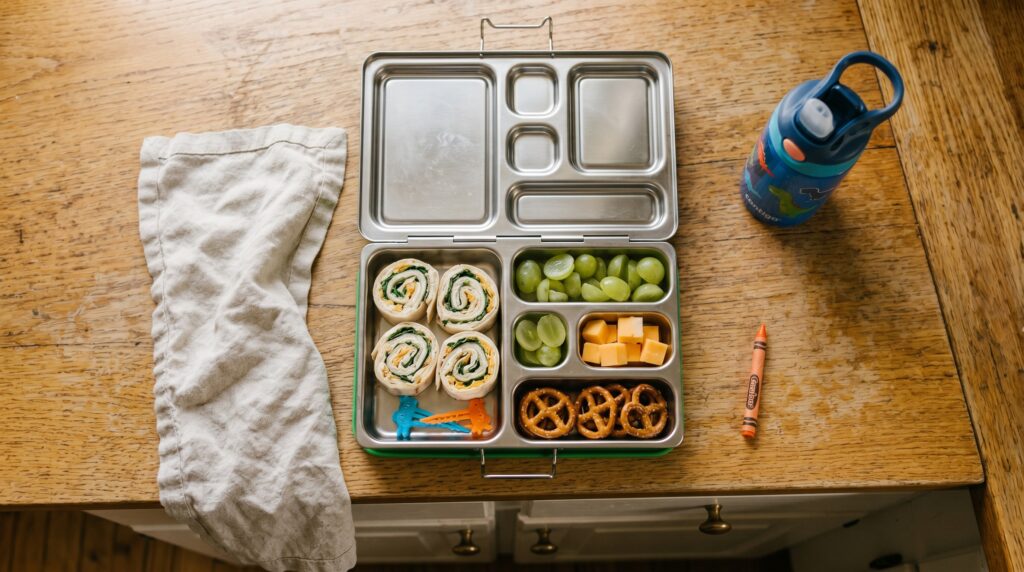
Last Tuesday, I packed my kindergartener’s lunchbox for the third day in a row, and for the third day in a row it came home full. Not partly eaten. Full. The turkey untouched, the cucumber slices still in their little compartment, the strawberries dry. I sat on the kitchen floor and ate the leftover pretzels myself.
That night I started over. Different ideas, different rules, different expectations. This guide is the result. It’s a real collection of picky eater lunch ideas that actually came home empty in my own kid’s lunchbox, plus the rules I figured out the hard way after about six weeks of full containers.
I’m not a dietitian. I’m a mom of a 4-year-old and a 5-year-old, and the 5-year-old just started kindergarten with very specific feelings about food.
What You’ll Get From This Guide
- What “picky eating” actually looks like at age 4–8 (and why it’s usually normal)
- The 3 packing rules that changed everything for my kindergartener
- 12 specific picky eater lunch ideas with real-mom notes
- The lunchbox mistakes I made before I knew better
- A no-pressure framework for “I won’t eat that” moments
- How to fold this into a Sunday prep routine that actually works
Why Picky Eating at Kindergarten Is Actually Normal
Here’s what surprised me when I started paying attention. The food preferences my 5-year-old developed in the first month of kindergarten weren’t really about food. They were about control, exhaustion, and a very loud cafeteria.
Kids ages 4 to 8 go through a stage where they reject foods they used to love. Texture changes feel huge. A slightly soft grape is a different food from a grape that’s firm. A sandwich with a tiny bit of crust feels like a betrayal. This isn’t something I read in a study. It’s something my kid taught me by handing me a bagel back and saying, “This one feels wrong.”
The American Academy of Pediatrics describes this as a normal developmental stage in early childhood, often peaking between ages 2 and 6. (I’m linking that there because if you’re worried, it helped me to read.) Kids are also growing more slowly during these years than they did as toddlers, which means they need less food than you’d think. The lunchbox coming home half full isn’t necessarily a problem. It’s just data.
The picky eating phase usually shifts on its own. In the meantime, our job is mostly to keep offering food without turning lunch into a battle.
That’s the lens I built every idea below around.
The 3 Rules I Wish I’d Known Sooner
I tried elaborate lunches first. Variety, color, the Pinterest bento with eight compartments. None of it worked. What worked was boring, and once I let go of “interesting,” the lunchbox started coming home emptier.
Rule 1 — Pack the Safe Food First
Every lunchbox starts with one food my kid will absolutely eat. For mine, that’s plain pretzels or a cheese stick. Then I built around it.
Why this matters: A kid who opens the lunchbox and sees nothing they trust will sometimes eat nothing at all. A kid who sees one safe food eats that, gets enough calories to get through the afternoon, and might also eat the new thing because they’re not in panic mode anymore.
I think of it as the floor. Whatever else happens, the floor holds.
Rule 2 — The Same Lunch Is Fine (Twice a Week, Even Three)
I used to feel like a bad mom packing the same lunch twice in one week. Then I read a bunch of comments from school cafeteria workers saying the kids who eat consistently are usually the ones with the same lunch every day.
My kindergartener now has a “Tuesday lunch”, pinwheel rolls, grapes, and a yogurt tube, which she requests almost every week. I pack it. She eats it. We both win.
The first time I made these pinwheels, she ate them in 4 minutes flat at the kitchen table. That’s when I knew I had a Tuesday lunch.
Rule 3 — Texture Matters More Than Flavor at This Age
This was the biggest shift for me. My kid will eat strong-flavored foods (sharp cheddar, dill pickles) but won’t touch a soft pear. I stopped thinking about whether food was “kid-friendly” in flavor and started thinking about whether the texture was something she’d accept.
Crunchy almost always wins. Smooth dips are usually fine. Anything stringy, mushy, or unpredictable in texture (looking at you, slightly overripe banana) is a no.
If you want a deeper dive into sandwich alternatives that lean into texture preferences, I wrote a separate guide on lunch ideas for kids who won’t eat sandwiches that goes through 8 specific options.
12 Picky Eater Lunch Ideas (Tested in My Kid’s Real Lunchbox)
These aren’t curated. They’re what I’ve actually packed, what came home empty, and what I learned. I grouped them into three styles based on what kind of picky eater you’re working with.
Sandwich-Free Lunch Ideas
If your kid is in the “I don’t want a sandwich” phase, these were my game-changers. (You can find the full versions in my picky eater lunch ideas roundup and the no-sandwich lunch guide.)
1. Pinwheel rolls. Tortilla, soft cream cheese, deli turkey, rolled tight, sliced into spirals. They’re visually fun, they don’t crumble, and the cream cheese seals the edges so nothing falls out. My kindergartener will eat 4–6 in one sitting. I pack them with grapes and a few pretzels for crunch.
2. Mini quesadilla bites. A small flour tortilla with cheese melted between, cut into quarters or strips. They hold up at room temp until lunch and don’t get soggy if you let them cool fully before packing. I pack them with a side of salsa or sour cream for dipping if my kid is in a dipping mood that week.
3. Buttered pasta cup. Plain pasta (small shapes work best, fusilli, rotini, ditalini) tossed with butter and a sprinkle of parmesan. I keep a container of pre-cooked pasta in the fridge from Sunday, so it takes 30 seconds to portion out in the morning. Pair with a few cherry tomatoes for the ones who’ll eat them.
4. Cracker stackers. A DIY Lunchable. Whole-grain crackers, deli ham or turkey slices cut into circles, and cheese slices cut to match. My kid loves building her own bites, and the assembly itself is part of why she eats it. This is the lunch I pack when I have zero energy on Sunday night.
Deconstructed Lunches (When They Don’t Want Anything Mixed)
Some kids hate it when foods touch. Mine went through a hard month of this. Deconstructed lunches were the answer.
5. The plate-style bento. Each food in its own compartment, nothing touching, nothing mixed. I use a Yumbox for this because the seal between compartments is real. Typical contents: cubed cheese, halved grapes, plain crackers, a few slices of cucumber, and one thing she’s never seen before (in tiny quantity, more on this later).
6. Components-only lunch. Like a charcuterie board for kids. A few cubes of ham, some olives if your kid is into them, a small handful of pretzels, two strawberries, and a dollop of hummus in its own corner. No “meal”, just food.
7. Dippable lunch. This is texture-friendly and surprisingly filling. Carrot sticks, apple slices, pretzels, and a dip your kid loves. We rotate between hummus, ranch, and sunbutter (my school is nut-free, so peanut butter doesn’t pack). I separate the dip into a tiny silicone cup so nothing leaks.
8. Build-your-own wrap kit. Tortilla cut into a triangle, a small container of cream cheese or hummus, and a few fillings (cheese, deli meat, cucumber slices). My kindergartener loves the assembly. The first time I packed it, I worried she’d just eat the tortilla plain. She did, the first day. By day three, she was rolling her own.
“Beige Food” Lunches I Stopped Apologizing For
This is the part where I’d like to confess. About 30% of my kids’ lunches are mostly beige. Pretzels, cheese, crackers, plain pasta, bread. Beige is calm. Beige is predictable. Beige gets eaten.
9. Pretzel + cheese + grapes combo. Plain pretzels, cubed mild cheddar, halved grapes. That’s the whole lunch. Calorically, it’s enough for a 5-year-old. She eats every bit of it.
10. Cream cheese pinwheels with one veggie hidden. Same pinwheel base as #1, but I add a thin layer of finely shredded carrot or spinach inside the cream cheese. Sometimes she notices, sometimes she doesn’t. When she does, I just say “yep, it’s there,” and she eats it anyway. (I’m not a fan of hiding food long-term — but a thin layer she’s aware of feels different than a deception.)
11. Plain pasta with a protein on the side. Buttered pasta in one compartment, cubes of cheese or pieces of cooked chicken in another. She’ll eat the pasta and one or two cheese cubes. That’s enough.
12. Toast cut into shapes with butter. I know. It’s toast and butter. But I pack it with halved strawberries and a yogurt tube, and the lunchbox always comes home empty. Sometimes the answer is just toast.
A specific note on amounts: I pack less food than I used to. A 5-year-old’s stomach is roughly the size of her fist. The first month of kindergarten, I was packing portions sized for a 9-year-old, and most of it came home as waste. I cut quantities by about 40%, and the eating rate went up.
What to Pack When They Won’t Eat Anything
There’s a specific kind of week where my kindergartener rejects everything for several days in a row. Last winter, we had one of these weeks, and I almost lost my mind.
Here’s the framework that pulled us out:
- Day 1–2: Pack only foods on her absolutely safe list. No new things. No “encouragement” foods. Just the 4–5 items she’ll always eat.
- Day 3: Same safe foods, plus one tiny portion of something she’s eaten before but isn’t crazy about. No comment from me.
- Day 4–5: Safe foods plus one slightly-new item (a different fruit, same protein). Still no comment.
I dropped from packing 5 components down to 3. I stopped writing notes. I let the lunchbox come home half-eaten for a few days without saying anything.
By Friday, she was eating most of the lunchbox again. The pattern repeats every 6–8 weeks for us, like a low-grade cycle. (For a longer guide on this exact situation, I have a post on what to pack when your kid won’t eat at school.)
How to Handle the “I Won’t Eat That” Moment Without Battles
This is the part I’m worst at and most embarrassed about. I am still bad at it. I keep getting better.
What I learned the hard way: pressuring a picky eater to “just try one bite” makes the next 12 lunches harder. The day I stopped saying “but you ate it last week!” was the day my kid started eating slightly more variety.
The script I use now, when my kindergartener says, “I’m not eating that”:
“Okay. It’s there if you want it. If not, that’s fine.”
That’s the whole script. No bargaining, no guilt, no “but I made it for you.” Sometimes she eats it anyway. Sometimes she doesn’t. Either way, I’m not making it a fight.
I learned this the hardest way possible. I once put a sticky note in her lunchbox that said “please try the cucumber!” with a heart. She told me at pickup that her teacher had to throw the note away because she “didn’t want to disappoint me.” We don’t do notes anymore.
If you’re worried that your kid’s eating is a clinical issue and not just a phase, meaning weight loss, fear of food, distress at meals, please talk to your pediatrician. Picky eating and ARFID (avoidant/restrictive food intake disorder) are not the same thing, and the second one needs real support. I’m not the person to figure that out.
Lunchbox Mistakes I Made With My Picky Kindergartener
These all sound obvious in retrospect. They were not obvious in real time.
Mistake 1: Packing too much variety. Eight compartments, eight different foods, six of them new. Decision fatigue for a 5-year-old. She ate one item out of eight.
Mistake 2: Sending unfamiliar food on Day 1 of school. First-week kindergarten is overwhelming. New cafeteria, new noise, new social stress. The first week is not the time to introduce edamame.
Mistake 3: Forcing the veggie issue. Three weeks of packing “one veggie she has to try.” Three weeks of veggies coming home in a sad pile. I switched to packing veggies she already likes (cucumber, sweet peppers) and stopped trying to expand the list during school weeks. We try new things at home dinners now.
Mistake 4: The “perfect bento” trap. Pinterest bento with food cut into stars and animal shapes. Took me 25 minutes per lunch. She didn’t care. She actually ate less because the food was unfamiliar in shape. I went back to halved grapes and rectangular cheese cubes, and she ate more.
Mistake 5: Ignoring texture preferences. I kept packing soft fruits because “they’re easy to eat.” She hates soft fruit. Of course, they came home untouched. Now I pack apple slices and grapes and the occasional firm pear, and her fruit compartment comes home empty almost every day.
Mistake 6: Packing food that needs utensils. A kindergarten lunch period is roughly 20 minutes, half of which is unpacking. Anything that requires a fork to eat is a gamble. Finger foods and pre-cut shapes win.
Mistake 7: Using guilt or pressure language. “Just try one bite.” “I worked hard on this.” “You ate it last week.” These didn’t help. They made the next lunch harder.
The Sunday Prep Routine for a Picky Eater Week
When you’re packing for a picky eater, prep matters more, not less. The temptation to wing it on Tuesday morning leads to throwing random fridge items in a box, which leads to a full lunchbox coming home.
My Sunday prep takes about 25 minutes. The full breakdown is in my Sunday lunchbox prep system with a free printable checklist, but here’s the picky-eater-specific version:
- Wash and pre-cut fruit for the week (grapes halved, apples sliced and tossed in a tiny bit of lemon juice to keep them from browning, strawberries hulled and halved). Store in glass containers.
- Pre-portion proteins. Cubed cheese in one container, deli meat slices in another, hard-boiled eggs ready to go.
- Make a batch of pinwheels. They keep 3–4 days in the fridge if wrapped tightly in plastic wrap. I make 8 on Sunday, and that covers two lunches.
- Pre-cook pasta or quinoa in a small batch. Stays good for 4 days.
- Keep a “safe food backup” stocked at all times. For us, that’s a box of plain pretzels and string cheese sticks. If everything else fails, these go in.
I keep the planning loose. I don’t write out which lunch goes with which day; I just make sure I have 5 components ready to mix and match. Some weeks, the same lunch goes on Monday and Thursday. That’s fine.
If your school is nut-free, the nut-free school lunch guide covers the protein-substitution stuff in more detail.
Frequently Asked Questions
What is the picky eater stage age range?
Picky eating is most common between ages 2 and 6, with a second smaller wave around ages 7 to 8 when kids become more aware of social eating. My kindergartener hit her peak picky phase right at age 4. Most kids cycle in and out of pickiness for years, not months.
What lunch foods do picky kindergarteners actually eat?
In my house: pinwheel rolls, plain pretzels, cubed cheese, halved grapes, mini quesadillas, buttered pasta, and crackers. Almost every “winning” lunch is some combination of these. Boring? Yes. Eaten? Also yes.
Should I send a new food in the lunchbox or only safe foods?
For most weeks, stick with safe foods. School lunch is not the place to introduce new foods; there’s no parent there to coach a hesitant kid through a first bite. Save new foods for home dinners or weekend snack trays. If you do send something new, send it alongside a full safe-food lunch and zero pressure.
How do I get my picky kid to eat lunch at school?
Pack less, pack familiar, pack finger foods, and don’t put a note in. Cafeterias are loud and rushed. Your kid has 15–20 minutes, actually, to eat. Anything that requires effort or unfamiliar decisions tends to come home full.
What’s the difference between picky eating and ARFID?
Picky eating is normal, phase-based, and doesn’t usually affect a child’s growth or well-being. ARFID (avoidant/restrictive food intake disorder) is a clinical condition involving fear of food, sensory aversions severe enough to cause nutritional issues, or weight loss. If you’re worried, please talk to your pediatrician. I’m a mom, not a clinician. This is the line where I stop, and you ask a real expert.
How long do picky eating phases usually last?
Anywhere from a few weeks to a couple of years. In my house, the strongest phases last 4–8 weeks and then loosen. Kids cycle in and out for most of early childhood. The phase ending isn’t the goal; getting through it without making it worse is.
Should I pack the lunch my kid wants every day?
Yes, mostly. No rule says variety has to come from the lunchbox. If your kid wants the same lunch three days a week, pack it. Variety can come from dinner, snacks, and weekends. A lunchbox is for getting calories into a tired kid in a loud cafeteria.
What if my kid only eats beige/white food?
Pack the beige food. Add one colored food on the side without pressure. Repeat. The beige phase usually shifts when the kid feels less pressure about it. My kindergartener went through a 6-week beige phase. I packed pretzels, cheese, and toast and didn’t fight it. She came out the other side eating cucumbers again.
Are there any “no-fail” lunchbox foods for picky eaters?
In my experience, the closest things to no-fail are: plain pretzels, halved grapes, cubed mild cheddar, buttered pasta, plain crackers, and pinwheel rolls with cream cheese and turkey. I keep these stocked because if all else fails, this combo goes in the lunchbox and comes home empty.
How do I deal with school lunch monitors who pressure my kid to eat?
Email the teacher. Most teachers are happy to make a note that your kid sets her own pace at lunch. My kindergartener’s teacher quietly stopped commenting on her lunchbox after one short email. The school staff is usually well-intentioned, but pressure language isn’t helpful for a picky kid.
Always check labels for allergens.
Anytime I mention products like crackers, pretzels, deli meats, or cheese sticks, please always check the package labels for allergens. Manufacturing facilities and recipes change all the time, especially for nut and dairy cross-contact warnings. I can’t guarantee what any specific brand contains.
The Bottom Line on Packing for a Picky Eater
The Tuesday I sat on the kitchen floor eating my kid’s leftover pretzels, I thought I was failing. I wasn’t. I was packing the wrong lunch.
Picky eaters don’t need elaborate. They need predictable, calm, and small. Safe food first, same lunch is fine, texture beats flavor. That’s basically the whole guide. The 12 ideas above are the recipes, and the rules above are the framework. Mix them in whatever order works for your kid.
If you want the full Sunday prep workflow that goes with this approach, the free Sunday Lunchbox Prep printable is yours. Save this guide for the next “I won’t eat that” week.
Tell me in the comments, what’s the one lunch your picky kid will always eat? I’m collecting them.